
Exploring the ideas of Martin Heidegger’s enframing and standing reserves in regards to human rights issues, specifically to the labor rights of factory workers.
SEPTEMBER 20 – Written by Ouli
The great metaphysical philosopher, Martin Heidegger’s 1954 work in “The Question Concerning Technology” continues to expose the many truths in today’s modern world. One of these truths can be related to human rights issues with his proposed concept of enframing and standing reserves. The author claims that we as individuals only see everything besides ourselves as “standing reserves” resulting in us encountering ourselves. How exactly does this relate to human rights issues, but more specifically factory labor workers? In delving into this discussion one must first understand what Heidegger means by his introduced concept of “standing reserves” and “enframing.” Given that we see everything but ourselves with the use of modern technology, “standing reserves” relate to efficiency and productivity. In defining “enframing” human beings continue to unfortunately put to work anything and everything into a system of resources that can be useful. In taking a deeper dive at these two concepts, let’s explore how exactly they relate to the world of labor factory workers.
Before diving into these two concepts, one must first explain why this form of medium in posting a blog was chosen to address this issue of human rights. In writing this blog, it is with hope and interest in the change of the conditions of labor factory workers to be better. The intended audience for this reading is for those immensely interested in philosophy, technology, and human rights issues. One of the easiest ways to reach this targeted audience is through a written piece of any kind with the future result of many more individuals being aware of the betterment of this issue. The main goal of this blog is to decode how enframing and standing reserves are at work in fair labor issues of factory workers. By the time this piece finishes, it is intended for the reader to start asking questions about themselves and the world around them. Some of these questions perhaps come in the form of “Are we still good as human beings though we continue to reduce other individuals for their economic value? What does this mean for the future of the human species in its relation to modern day technology?”
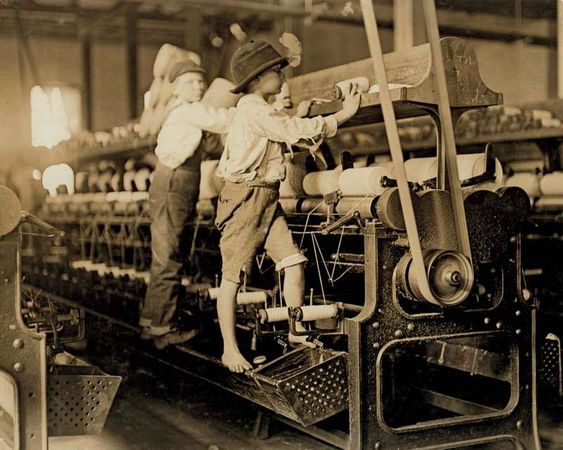
In entering the devastating world of factory workers, it may be argued that their conditions are of no good compared to how much they get paid. These individuals are being not only exploited but are stripped from their basic human rights for the sake of economic efficiency. In relation to Heidegger’s concepts, humans enframing the world into a system of resources has led to these workers being represented as standing reserves. Workers are no longer seen for who they truly are and their connection to their work is no longer of importance. Rather, it is favored for them to produce as many products as possible whether or not their conditions are in favor of them or not. This idea views human beings as a machine rather than acknowledging their significant contribution to the world. This in Heidegger’s takes is the definition of alienation and loss of meaning. In the sense of fair labor issues of factory workers, they are experiencing deep dehumanization with no voice present to advocate for them.
To further examine these two concepts, Heidegger makes some valid critiques on how the importance of productivity and efficiency relates to this mindset of a technological machine. In relating to labor rights of factory workers, a list can be made out of the types of conditions that are ignored that these individuals face. According to data by the Fair Labor Association, these are some of the conditions in which factory workers face today for the sake of economic efficiency:
- Harassment or Abuse
- Forced Labor
- Child Labor
- Low Compensation
- Long Work Hours
- Neglect of Health, Safety, and Environment
What does this say about the human species if we are willing to allow efficiency to dominate us? Heidegger makes this exact question through the idea of technological machines which in this case the technological machine is represented by factory workers. It makes one wonder what the future of modern day technology would look like if these circumstances continue to be ignored by the general population in a world of capitalism.

In further investigating the questions previously mentioned in this writing, the use of AI may be helpful to engage with for the sake of grasping a better knowledge of this issue. One asked Chat GPT the following three questions based off the current topic of discussion:
I am writing a blog piece that relates to Martin Heidegger’s “The Question Concerning Technology” with his concept of Enframing and Standing Reserves through the issues that are faced by factory workers today. What is your opinion on these three questions?
- Are we still good as human beings though we continue to reduce other individuals for their economic value?
- What would you propose as a change to occur regarding this issue?
- How do you imagine the future of the human species in relation to modern day technology based on this background information?”
In answering the first question Chat GPT states: “Reducing people to economic value compromises our humanity, as it prioritizes utility over dignity, which contradicts the essence of being good.”
The second question Chat GPT proposes: “Shifting towards a labor model that emphasizes human dignity, fair wages, and ethical treatment over pure productivity—essentially, re-humanizing workers in the supply chain.”
Finally for the third question Chat GPT claims: “Without conscious change, technology risks further alienating people as mere “standing reserves.” But, if wielded responsibly, it could enhance human creativity and autonomy, allowing technology to serve humanity rather than control it.”
Taking into consideration the responses of AI regarding this issue, one can make the argument that it does not agree with Heidegger’s concepts of enframing and standing reserves. Perhaps giving the background information about what specific issue is at hand may gear the AI to adhere to the writer’s (me) preference of answer. Either way, it is clear that the responses received by AI support the idea of this blog along with the previously written points about dehumanization of factory workers. What does stand out is the third question regarding the future of the human species with technology on this issue. Its claim that we must have power to control technology for the sake of letting human creativity thrive over economic efficiency is a very straightforward and a hopeful proposed solution.
When focusing on self encountering with Heiddeger’s concepts in mind, it is simply based on the fact that human beings are selfish with the world around them. For the sake of human rights such as the exploitation of factory workers three main key points can be proposed. The first being the dehumanization of these works via such as data from the Fair Labor Association to support it. Next we have an ignorance to ethical standards as these workers are seen and treated as if they operate in one big machine that creates products in order for money to be made. Finally, there exists a loss of meaning between the workers and their craft as this is normalized in today’s society. If a manager was to continue to ignore the humanity behind their workers, does it make it right that it is for the sake of economic productivity with the help of modern day technology? One thing is for certain, fair labor issues are only one section of many other problems that could fit into Heiddeger’s concept of enframing and standing reserves. It is ultimately up to the individual to recognize their own interpretation of these two concepts in this current world we live in and what it means to them and the people that they surround themselves with.

Author’s Note: Thank you for reading, I hope my transparency resonated with you!